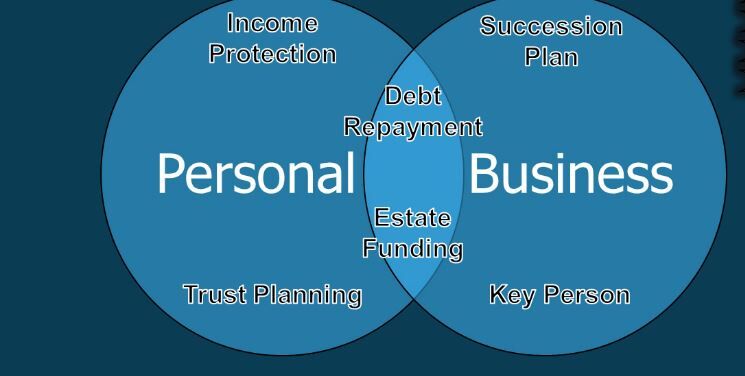
Getting money out of your business on the most favorable basis
Attracting, Retaining, and Rewarding Key Employees
Preparing your business for the next owner
Consider key issues like succession planning and retirement, and avoid putting your families' largest source of income and financial security at risk.
Reward your employees to attract and retain top talent. Learn how small businesses can set themselves apart from their competition
Financial: Pension and retirement plans
Insurance: Full health (including vision and dental); disability insurance; life insurance.
Family: Flex-time; maternity and paternity leave
Plan for your future with our exclusive process
Profit first, and keep more after taxes
Improve the Life of Your Business
Optimize your business so you can leave it on Your Own Terms
Your company's leading edge is tied to the skills of key people-innovators, managers, relationship builders. Their loss can be difficult to quantify because so many components of the business will be affected. It is more than replacing a job function-consider the loss of . . .
Sales revenues, market share, and client goodwill
Proprietary knowledge and systems
Production capacity and cash flow
Credit standing with lending sources and suppliers
Time and money to recruit and develop replacements
And what would losing the Number One Key Person, the owner, mean? You may have buy-sell agreements in place, but have they lost their effectiveness because circumstances or assumptions changed while no one was keeping track?
A. Are your business succession and legacy plans documented and up to date?
My family would struggle to settle my business and personal affairs if I died or became incapacitated.
My planning is organized, but my family may still face stress in settling my estate.
My Business Exit and Estate planning documents are up to date, but the Pandemic has made my Exit plan more of a contingency than a Succession plan for legacy goals.
My advisory team meets with me annually to ensure everything is organized, creating a clear roadmap to settle my affairs with minimal taxes and legal fees.
How do we define the added value we offer our customers? Which employees control it? What are the risks of the company losing them?
What is our ideal competitive position? What key people are we depending on to get us there and keep us there? What are the risks of losing them?
How has our corporate philosophy evolved? Who defines it? How important is that person to the company's success? What would losing him or her mean?
If key shareholders were unexpectedly gone, who would control the company? Could buying out inactive shareholders drain our earnings or impede our growth?
B. My financial plan ensures peace of mind for my family and me.
I worry about not having enough money for retirement or market downturns.
I think I have enough saved for retirement, but I'm unsure about my family's future after I'm gone.
I believe our savings will cover my spouse's and my lifetime, but there are some unresolved issues for our family.
Regular reviews with my advisory team give me full confidence that all aspects of our financial planning will support us for life.
C. My business and investment objectives are segmented by timeframe and priority.
My business is my retirement plan, though I may never retire or afford to.
The Pandemic has negatively impacted my business outlook. I'm unsure how my investments and insurance are set up for the future and fear market corrections.
I haven't planned an exit strategy for my business or its sale value. I don't fully understand my investment risks or which accounts to draw from in retirement.
My advisory team and I created a succession plan before the Pandemic, but it's likely outdated. We've done some good planning, but it needs updating.
We regularly update our succession plan to support my family and reward key employees, ensuring they continue building their future within the business.
D. We should be better prepared with our income tax planning.
Each quarter brings a sense of urgency, and taxes can often be a source of frustration.
I have a general understanding of my tax situation, but there may be opportunities I am unaware of that could benefit my business, myself, and my family.
My tax preparer does not provide tax planning advice or proactive strategies.
My financial, insurance, tax, estate planning, and legal team guide me on saving money on taxes now and planning for the future.
E. My financial objectives have been stress-tested for the sequence of investment returns that is beyond my control.
If interest rates were to decrease, I could begin planning beyond merely covering payroll and bills.
My business profitability has declined compared to past levels, leading to uncertainty about selling it and having sufficient funds for retirement. I have external investments and am concerned about my exposure to the sequence of their investment returns and its potential impact on my retirement lifestyle.
I aim to sell my business within the next 3 to 5 years, and my partners may wish to buy me out. However, I am unsure if they can fulfill the terms of our operating agreement, which causes uncertainty about the extent to which I should be concerned about my outside investment returns.
Our CFO has refined our financial statements to assess what constitutes a favorable offer if we decide to market and sell the business. As part of our regular business planning, we evaluate the compensation of key employees and their potential as ownership candidates.
F. I know I should have a well-coordinated team of financial professionals.
I get some advice on taxes, insurance, and investments, but there are gaps.
I have independent advisers (accountant, adviser, attorney, banker, insurance agent), but they don’t work together in a coordinated manner.
I worry about potential healthcare expenses and know I haven't planned for long-term care.
My advisors should regularly update me on how my financial plan is structured to minimize what is risking my future lifestyle and legacy.
Your company's leading edge is tied to the skills of key people-innovators, managers, relationship builders. Their loss can be difficult to quantify because so many components of the business will be affected. It is more than replacing a job function-consider the loss of . . .
Sales revenues, market share, and client goodwill
Proprietary knowledge and systems
Production capacity and cash flow
Credit standing with lending sources and suppliers
Time and money to recruit and develop replacements
What would losing the Number One key person-the owner-mean? You may have key person insurance and buy-sell agreements in place, but they may have lost their effectiveness because circumstances or assumptions changed while no one was keeping track?
How do we define the added-value we offer our customers? Which employees control it? What are the risks to the company in losing them?
What is our ideal competitive position? What key people are we depending on to get us there and keep us there?What are the risks of losing them?
How has our corporate philosophy evolved? Who defines it? How important is that person to the company's success? What would losing him or her mean?
If key shareholders were unexpectedly gone, who would control the company? Could buying out inactive shareholders drain our earnings or impede our growth?
Does the buy-sell plan take into consideration . . .
The survivors' cost basis?
Creditors' rights?
Ratio of ownership desired after buy-out?
Tax brackets of owners and corporation?
Number of shareholders, differences in ages and stockholdings?
Certainty of performance or unreasonable accumulation of surplus?
Constructive ownership?
Corporate AMT?
Policy maintenance and stockholders' right to acquire policies?
Rights to excess funds and contingencies for insufficient proceeds?
Ask CEOs what their most valuable asset is, and the majority will answer, my people, the team of management and creative experts that drive innovation and profitability. Ask any of those people what their biggest financial concern is, and the majority will answer, my family's long term financial security.
Both responses lead directly to the potential of executive benefits plans to . . .
Position companies to more effectively compete for executive and technical talent and align their commitment to long term corporate goals.
Position highly compensated employees to maximize tax-deferred wealth accumulation strategies and align their future with the corporate mission.
While nearly every large public company has installed such plans over the years, most privately held businesses compensate key people with only salary, bonus, and perks. The problem in the large corporations is that layers of executive benefits plans have left them with an under-valued and impossible-to-administrate mess. The problem for private companies-compensation drains critical cash flow and forces key people to be less concerned about the corporate bottom line than the personal one.
1. If you do not have an executive benefits plan, what is your competitive position within your hiring market? Within your industry? What has been your turnover record for highly compensated employees? What is the real cost of that loss?
2. What is the company philosophy and track record for rewarding loyalty, longevity, and productivity? How do you align your executives' personal financial goals to corporate financial goals?
3. How do the limitations of qualified pension plans affect the members of your management team? What opportunities to increase their tax-deferred investments would they use if you offered?
4. If you have an executive benefits plan, how well-utilized and well-appreciated is it? Is it effectively securitized? Is it effectively financed? Is it in DOL compliance?
5. What kind of flexibility was built into the plan? Did that create tracking and reporting headaches? Has it been administered to your company's standards?

As a small business owner, you are challenged with attracting and retaining the best employees. A good retirement plan could help you meet this challenge while allowing you to take advantage of some valuable tax benefits*. I can provide certain consulting services in a non-fiduciary and non-advisory capacity. I can also provide recommendations on who should provide investment management to your company’s qualified plan by choosing from a suite of Eagle-approved investment managers.
Once you have determined the appropriate retirement plan for your business, my next step is to assist you with:
identifying leading investment managers
reviewing proposals
managing relationships with nationally recognized record keepers
making informed decisions concerning the investment manager and its performance
conducting participant education and enrollment services
creating a process to manage relationships with your service providers
In addition to offering the Eagle ERISA Program, I can also assist you in my capacity as a New York Life agent through various financial and insurance strategies with:
protecting your investment in your small business
helping you keep your business in your family
planning for your retirement after you sell your business
supplementing employee benefits for life insurance protection through New York Life’s voluntary payroll deduction program1

Staying ahead in today's marketplace isn't easy. Competitive pressure, corporate governance issues, changes in legislation and tax reform have changed the way executives are compensated. Attracting and retaining the best talent to help grow your company requires a comprehensive benefit package that fits your corporate objectives – while meeting regulatory requirements.
Remain competitive by attracting, retaining, and rewarding top executives who have the ability to make a difference in your bottom line.
Help identify factors that may influence the long-term value of your business.
Provide Incentives to encourage executives to stay with your company.
Short term incentives white paper
Create management benefit packages that motivate long term performance.
Incentive planning white paper
Provide retirement benefits commensurate with pre-retirement pay levels – while overcoming limitations and restrictions imposed by traditional pension, profit-sharing and welfare benefit plans.
How should corporations maximize the value of retirement plan benefits?
Over the past decade, the environment for company-sponsored retirement plans has shifted from defined benefits plans to the dominance of the 401(k). As popular as the 401(k) remains, these plans have given rise to consistent complaints.
For example, employers and employees alike are concerned when they cannot get timely, accurate data on the status of the plan. Employees may perceive a lack of investment diversity to meet their allocation needs. And highly paid employees may become frustrated when their contributions are limited by low participation among the general employee population.
If your plan suffers from these problems, you can overcome them at the design level. Using an ideal plan design as the starting point, your plan could include...
Complete Investment Independence
Assessing fiduciary responsibility
Daily valuations of account balances for all participants.
Internet or toll-free participant access to account balance.
Fiduciary compliance expertise designed to protect and insulate the plan sponsor from potential corporate and personal liability.
Mutual fund record-keeping fee offsets designed to lower employer costs.
Business owners, key employees, and high income earners are finding it more difficult to adequately save for retirement. Why? Qualified retirement plans and group insurance plans, even Social Security, place limits on contributions, payouts and tax advantages of benefits for highly-paid individuals. We may need at least 80 - 100% of pre-retirement income to maintain our current standard of living in retirement.
With qualified plans and Social Security alone, you and your key employees could receive as little as 30% of your current income at retirement - creating a retirement income gap. Cash values from life insurance can help fill the income gap.
Many types of investments produce ordinary or passive income. The taxes on this income are a drag on the net investment return and overall appreciation of the investment. The ability to manage your investment in a tax efficient manner by reducing or eliminating these tax can produce a significantly better tax-equivalent result, along with providing a self-completing tax advantaged death benefit when structured properly.
*Neither Eagle Strategies nor New York Life or any of their representatives provides tax or legal advice.
1This program is not intended to be subject to the Employee Retirement Income Security Act of 1974 (ERISA). The employer does not contribute to or endorse the program. Employee participation is completely voluntary.
“At some point, every owner leaves his or her business – voluntarily or otherwise. At that time, every owner wants to receive the maximum amount of money in order to accomplish personal, financial, and estate planning goals.”
~ John H. Brown
Owners begin thinking about the Exit Planning process when two streams of thought begin to converge.
The first stream is a feeling that you want to do something besides go to work everyday—either you would like to be someplace else—doing something else—or you simply no longer get the same kick out of doing what you have been doing.
The second stream is the general awareness that you are either approaching financial independence, or making significant strides toward reaching that goal, or can achieve financial independence by selling your business.
There are a lot of reasons to go into business: independence, financial security, the pursuit of a dream. But have you thought about how you are going to get out?
Exit Planning is a customized process designed to assist business owners in establishing, prioritizing and ultimately achieving their exit objectives. It enables owners to leave their company when they want, to the successors they want, and with the amount of cash they need.
Whether your successor will be your children, a key employee or an outside buyer, Exit Planning helps you maximize your financial return and minimize your tax liability when you transfer your business. If you die or become disabled before you retire, Exit Planning will help the business survive your departure, enabling you and your family to receive its full value.
A successful business succession strategy begins with three important owner decisions:
When you want to leave
How much money you want when you leave
Who you want to leave the business to
These form the foundation of your Plan.
Step One establishes what you want or need in order to leave your business in style. Step Two determines what you have -how much is your business worth? If you're selling to a family member, key employee or co-owner, future cash flow of the business after you leave it, is even more important than value.
What features, or characteristics, are necessary to make your business saleable and valuable? These features (Value Drivers) either reduce the risk associated with owning the business or enhance the prospects that the business will grow significantly in the future.
If your goal is to sell to a third party, we can help you evaluate financial considerations associated with the transition and work with your professional advisors throughout the process.
A sale to insiders does not end with the closing. Only when your price is paid in full does the transfer end. We help you orchestrate a successful sale to insiders who often lack sufficient cash.
But business continuity is much more than simply making sure there is a new owner. If you die or become disabled before your exit is complete, your business continuity objectives and your family's financial goals may be significantly affected.
The sale of a business generates cash. Proper planning may help you preserve more of those assets for your personal goals, your family, and other priorities. We can help you identify planning considerations and coordinate with your legal and tax professionals.
A person does not build a successful business, through years of effort, in order to have it sold for the best offer that the executor may receive following his or her death. There are too many contingencies to leave to chance the disposition of a business interest after the owner’s death. In most cases, the business is really treated like a member of the family, so it is surprising that the parents could let that happen.
Lack of planning for these transitions is the reason in nearly every case. There are only three directions the plan could take, but each one requires sophisticated advanced preparation. Businesses can be . . .
Preserved for family ownership and management.
Sold to partners or outside parties for family revenue.
Liquidated for the family members to pursue other directions.
The success of these options depends on having everything in place-goals, agreements, people, and finances. These are not simple steps to begin with, but once the plan has been finalized and initiated, it must be regularly reviewed and updated to reflect changes in any of these circumstances over time.
What different ownership/control scenarios would result from your retirement, disability, or death? What financial scenarios? What family scenarios?
What agreements are in place to support the right scenarios occur? What valuation and funding assumptions support the agreements? How often are they reviewed?
What are your spouse's and children's feelings about your business at this stage of their lives? What is their involvement in the business today? In the future?
What potential conflicts of interest will be created by your succession plan if some children remain active in the business while others do not?
If you feel the preferred option is to sell the business, how would your heirs find a buyer? If one could not be found or the price was too low, what is the fallback position?
If your business experienced an unexpected ownership transition, could any of the following become challenges . . .
Liquidity needs for estate tax and estate equalization purposes forced a sale in an unfavorable environment.
The revenue base was not sufficient for the needs of broader family ownership.
Second generation fell into factions over financial and management issues.
Family members, executives, or outside CEOs failed to fill your leadership role.
Through our affiliation with New York Life's Advanced Planning Group we are uniquely positioned to support professional advisors on life insurance matters. In today's complex world, professional advisors are being asked to be involved in the planning and due diligence for all financial transactions including life insurance.
Here is a listing of some of the many ways we have been asked to provide value and support for professional advisors and their clients:
Life insurance policy audit
Create a life insurance inventory
Client Needs Analysis
Product Due Diligence and Carrier Evaluations
Estate Tax Projections
Estate Tax Liquidity Analysis and Discounted Payment Options
IRC 6166 Analysis for Business Transfers
Private Finance Consultations
Premium Finance Evaluations
Supplemental Retirement Plans
Buy-Sell Planning
To learn more about these services, please click here to visit the Advanced Planning Group's website.